Hands

10 Feb

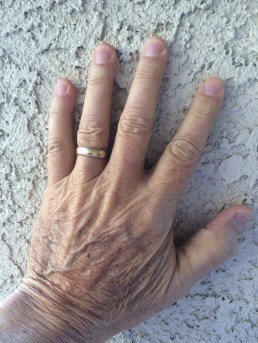
IMG_3066     Ever looked at your hand closely?  I mean, closely!

I’ve carried mine around for almost 75 years but I can’t say that I’ve spent much time examining the contours and the valleys.  But, the other day when I opened my daily meditation book and sought out the day’s focus, here’s what it said:  Find a quiet place, relax, and spend 30 minutes focusing intently on your own hand.  What do you see…really see?  What stories does it tell you?  What do you learn about yourself from spending the time focusing on your own hand?

So I tried it…a little uncomfortably at first…seemed like a rather strange thing to do.  But as I sat in the quiet, I practiced the discipline of focusing, and here are a few observations: the gold wedding band that was put on my finger 55 years ago used to be etched in a lined pattern.  Now there is no trace of etching, only a smooth surface that has gotten that way through lots of adventures and lots of days.  I remember what it used to look like, but I think I like it better this way.   Then there’s the skin, once supple and strong, now thin and scarred in places, spotted with what my mother used to call “age spots”.

I asked my doctor recently why my hands bruise much more easily than they did 25 years ago.  He started his answer, like every answer to all my health questions, with:  “Well, at your age…”

Today is Ash Wednesday, a very special day in the Christian tradition, and I’ve just returned from an evening church service where the minister took us one by one, made the sign of the cross on our foreheads with ashes from last year’s Palm Sunday palm branches, looked each of us in the eye and declared:  “From dust you have come, and to dust you will return.”  Life is full of signs and messages reminding me of mortality, and the truth of the minister’s words is visible in weathered hands.  But I found myself smiling at my hands as I finished the meditation exercise.  They have held so many things over the years…and now they hold memories that make me laugh and sigh.

Our hands hold more than we realize…much more.
Stones

25 Jun

Stones

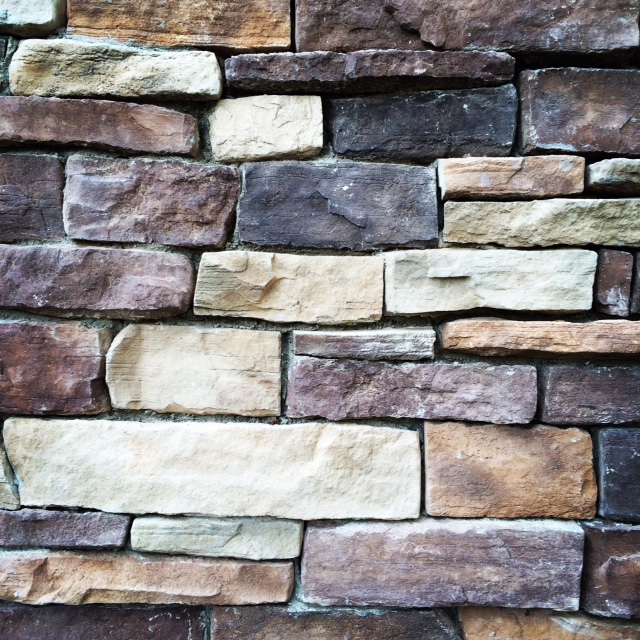
Stones –

They come from the earth.

They all share the same composition.

They all have color and shape.

Together, they all share a common purpose.

And no two are exactly alike.

Stones can teach us a lot.  Perhaps we should ask them about life instead of throwing them at each other.


Faith Based In Reality

8 Jun

Sometimes a sentence jumps off the page, demanding attention and reaction.  So it was yesterday with this line from the New Testament letter called Philippians, supposed to be written by Paul, and here translated by Eugene Peterson in The Message:

“My prayers and hopes have deep roots in reality.”

So many people are writing today about the slow demise of the institutional church, and with good reason.  The latest poll figures confirm that the ground is changing under the structure, and that those who care should take serious note.  My simple suggestion is that those of us associated with the changing church need to have “deep roots in reality”.

Paul was a very practical man as an entrepreneur of the early Jesus movement.  He may have had a mystical moment from time to time, but for the most part he faced the realities of establishing, encouraging, and nurturing little Jesus communities in hostile territories.  He admits that his “prayers and hopes have deep roots in reality”.  So should ours.

Faith based in the realities of the 21st century is urgent because sometimes we in the institution base our work in Fantasy…”God will provide even if we don’t”; in History…”we can make it like it used to be when times were happier”; in Dishonesty…”don’t worry, everything is wonderful and our future is secure”; and even in Arrogance…”we alone are responsible; we can chart the course ourselves”.

Here’s what is often heard from non-reality based faith:

“We don’t have time (or need) to discern; we can decide!”   Or, “Once we attract people, we can hold onto them forever”.  Or, “We can have better programs if we try harder.”  Or, “The more we do, the better we are.”  Or, “If we build it (do it, try it), they will come.”  Or, “Just get  people into leadership roles…they will stay until they drop.”

Those statements are simply not reality anymore.  They are based on wishful thinking and poor logic.

I like the way Paul brings this thought to a conclusion.  “So this is my prayer: that your love will flourish and that you will not only love much but well.  Learn to love appropriately.  You need to use your head and test your feelings so that love is sincere and intelligent, not sentimental gush.”

Time to face and invest in reality.

Smiling Flowers

3 Mar

Grand Canyon 2014 033

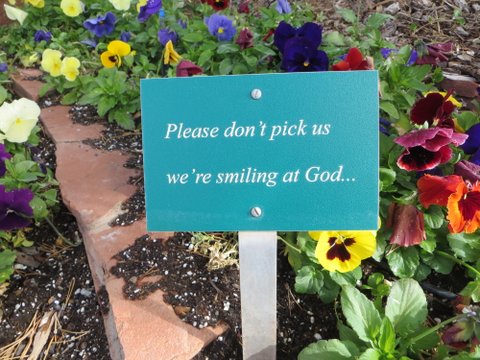
The smiling flowers make me reflect for a moment on a question many people have asked.  Indeed, where is God?  No matter what your religious persuasion might be, the nature, character, and “presence” of God have puzzled humankind for as long as we have identified a sacred “Other”.  Conventional religious teaching, what I remember from Sunday School, answers the question of “where” by saying:  Look up!  God is “up there”, with “up there” being heaven, a location beyond the clouds and beyond human sight.  “God is in his heavens, and all’s right with the world.” (Gender issues aside, apparently you have to look up when you smile at God.)


But the flowers in this photograph seemed to be smiling in all directions.  Beautiful flower faces are pointing up and down, here and there, and toward all points on the compass.  Could it be that smiling at God is not restricted to one place or even one perception?  Could it be that the presence of the Sacred is everywhere…in and through reality as we know it?  I like to think that no matter where I look, into the good and into the not-so-good moments, I can “see” that which I call God.  The Presence is radically present.


So, like the flowers, smile at life in all directions.  God will see it.


The Face

27 Feb

Des Museum 2014 023

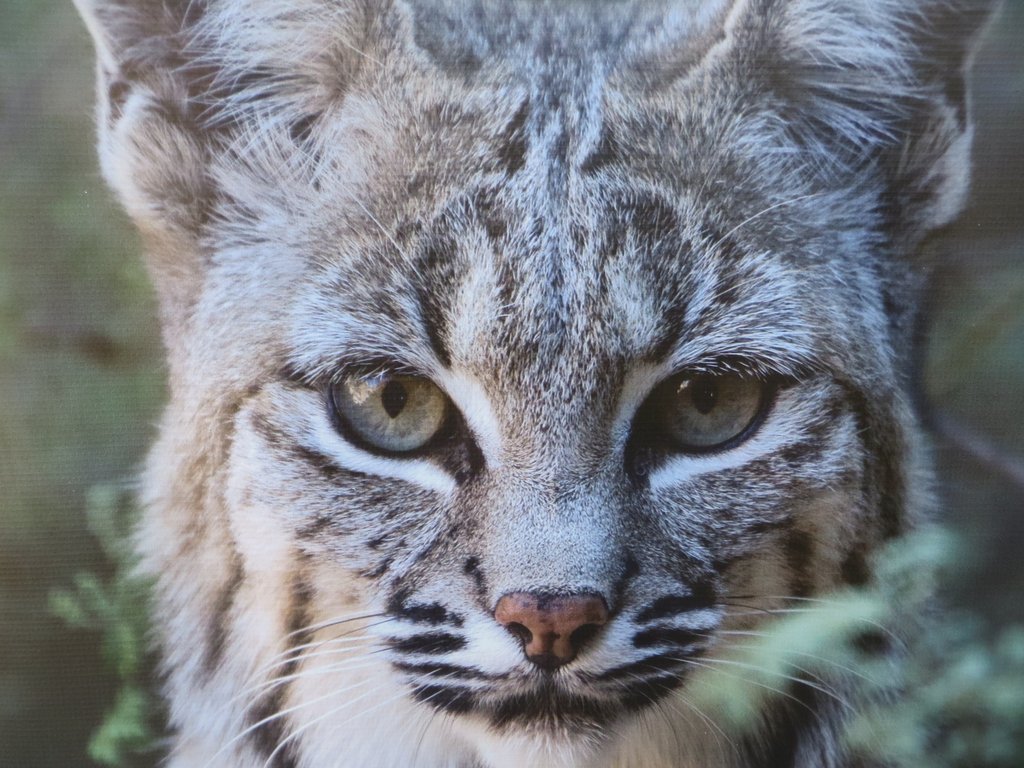
Taking this picture was quite a feat!  I approached very slowly, studying the angles, looking for just the right sun reflection. Then I knelt in front of this beautiful face and stayed motionless until my legs were crying “enough”.  At just the right moment, nose to nose with those piercing eyes, “click” and it was done.  What an amazing face!

Okay, now the real story.  Not long ago, while walking through Tucson’s wonderful Sonoran Desert Museum with my wife, she stopped in front of a canvas poster at the entryway to the outdoor park.   “Look at that beautiful creature”, she said, and I turned to find myself face to face with this stunning image.  Poster, yes.  I took a picture of a picture.  I admit it, and I would give credit to the real photographer if I knew a name, and I would ask that person “how did you feel, what did you think when your eyes met?”  What a thrilling and thoughtful moment that must have been.

I wonder what goes through the brain of an animal like this one as she looks into human eyes?  Impossible to know, yes.  But I can tell you what runs through mine.  A sense of sadness.  A wave of anger.  And I want to say “I’m sorry, beautiful friend, that you and I are not companions on this earth.  I’m sorry that you are prey to my power, an ornament for my sport, an object to control, a nuisance in my land development project.  I’m sorry that your world is shrinking and your children are hungry because my concrete world is expanding, my progress is your problem.  I don’t think this is the way it’s supposed to be.”   I shudder to think that someday the poster may be all that’s left.  Surely this is not the way it was meant to be.

Ask the eyes.

Sharing The Grapes

13 Jan

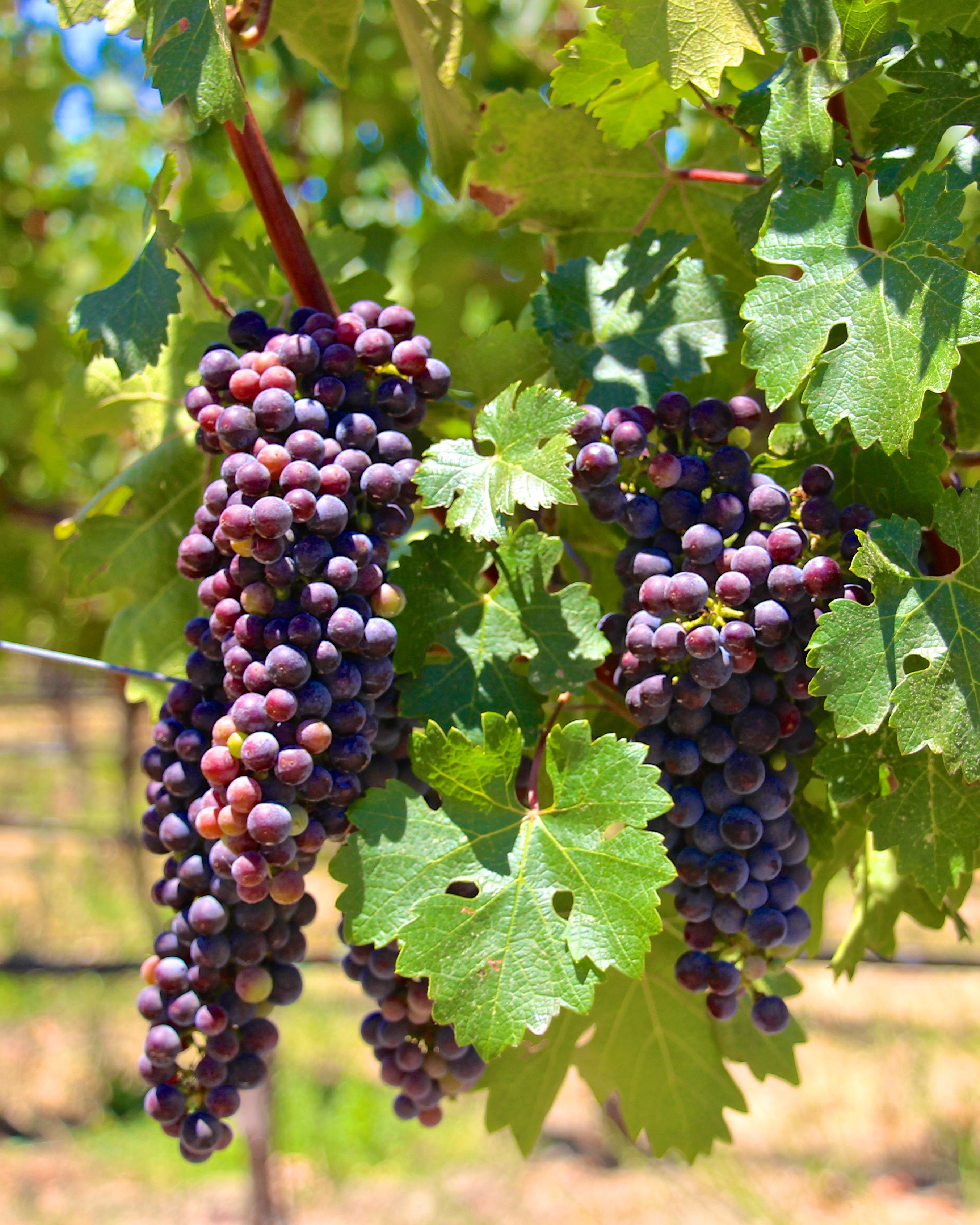
grapes   Reza Aslan, educator and writer, recalls an old Sufi parable.  It goes like this:  Once four men were traveling together when they became very tired and very hungry.  They were from different countries and spoke very different languages.  In their hungry state, they tried to decide what to buy with the one coin they held in common.  The Persian wanted to spend the money on angur; the Turk, on uzum, the Arab on inab; and the Greek on some stafil.  Soon their wrangling turned to confusion and confusion to anger as each traveler tried to convince the others that his own solution was the best.  In the midst of their bickering, a stranger approached…a traveler, too, and a linguist by profession.  It took him only a moment to understand that they were all, in fact, asking for the same thing: grapes.

I believe one fundamental truth about life is that we all want basically the same thing.  Despite language, religion, culture, race, or gender our basic need is simple and similar.  Is it respect, love, acceptance, a sense of personal worth…?  Pick one, or name your own.  If only we could talk across and above our shouting and fear, we might find the more precious things we hold in common.   We might discover that we are more alike than we think.

The Golden Leaf

6 Jan

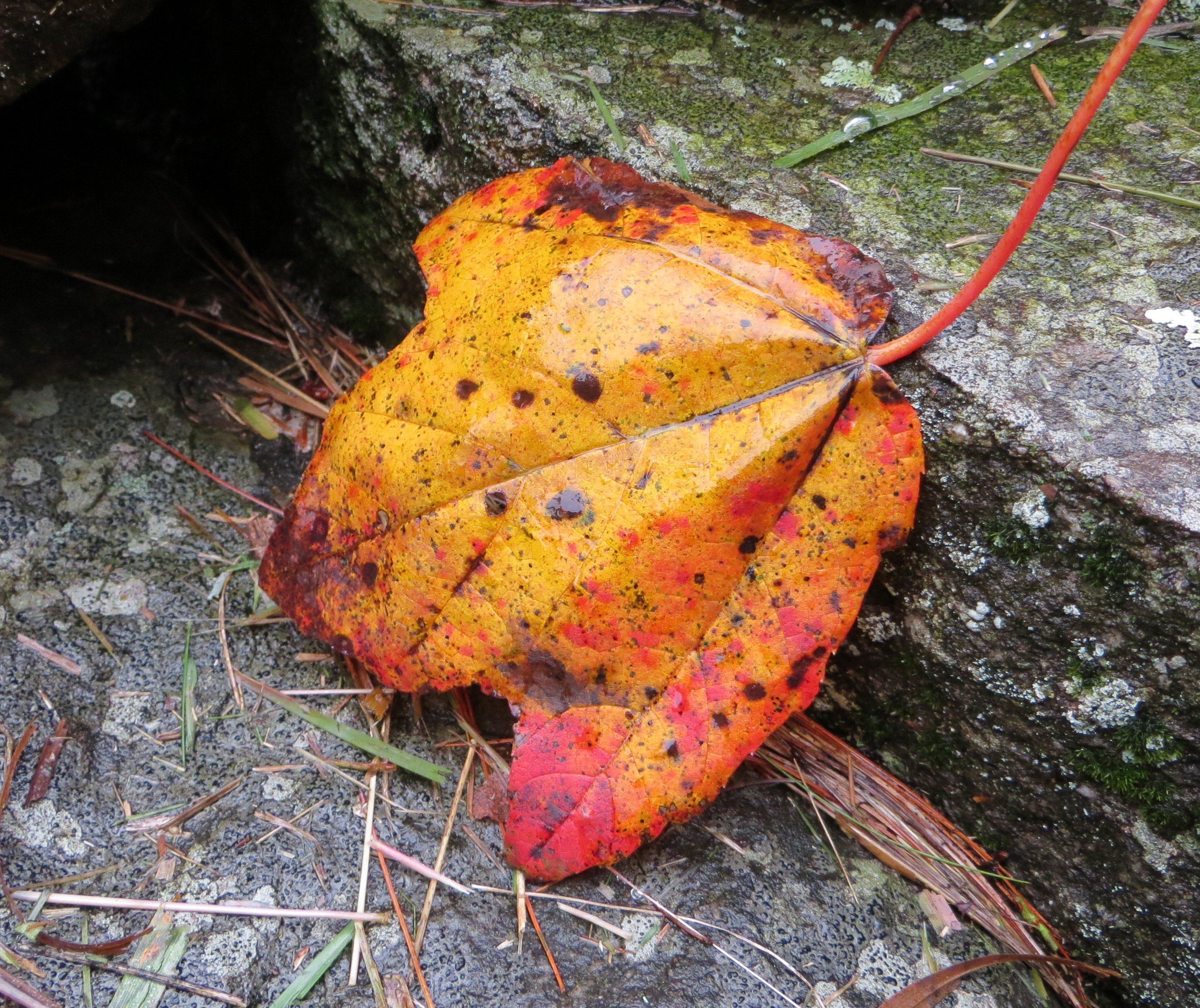
IMG_2123  More than 7,000 light years away, filling the darkness of deep space with bursts of light and life, are the Pillars of Creation.  They are nebulae, vast collections of gases and dust which birth new stars in interstellar space.  In the mid-1990s, the marvelous Hubble Telescope photographed the two pillars, and it was breathtaking to imagine that our known solar system could be captured in one tiny finger, one little whispy protrusion on the edge of these mammoth engines of life.  Now, astronomers say, Hubble has gone back for a second look, and the photographs are as stunning as before.  To sit with these amazing pictures is to imagine the power and grandeur of creation, incredible colors, textures, the elements that swirl through everything that is.

But I wonder if the Pillars of Creation, for all their majesty and mystery, reveal any more about life than a golden leaf lightly resting on a moss-covered sidewalk?  For in my simple way of thinking, the golden leaf is of the same essence as that which bursts in brilliance 7,000 light years away.  Everything is related, and everything reveals wonder.  The Pillars of Creation cause us to gasp…and so does the exquisite golden leaf.


Flight School

12 Sep

They line up each morning.  Instructor at the front of the line, students trailing behind.  They position themselves at one end of the take off area, students watching intently, eager to learn how to lift off and climb into the sky.  Now the instructor starts.  She moves slowly at first, as if to say, “see, this is the way to begin”, but then she increases speed and waddles down the path.  In a moment she spreads her wings and goes through a series of hopping motions, like she’s stepping on hot stones.  Flap, hop.  Flap, hop.  The two students watch in wonder and probably try to imagine their young wings catching the air.

So it goes recently at the flight school in my backyard, just behind the azaleas along the base of the cinder block wall in the upper section of the yard.

Then the fun really begins as the young doves try to copy the instructor’s example.  The first one begins to run on shaky legs, then comes the slight extension of the wings, next the hoping and flapping, and finally the crash and roll.  They look like the Gooney Birds I used to see on Midway Island in the Pacific Ocean.  If you’ve ever seen Gooney Birds land or take off, you know what I mean.  In flight, they are beautiful and graceful.  Landing and taking off is another matter entirely.

I’m proud of Mom or Pop instructor (can’t tell which) and the eager learners.  I hope the little ones master the art of flying soon because it’s too dangerous to be a grounded bird.  Too many predators looking for a quick meal.  For two days I’ve found the babies on the lower ground level and scooped them up in my hands to put them back onto the relative safety of their training ground.  This morning I could tell the young learners were making progress when one of them flew from the ground to the top of the black metal fence.  Brother or sister still hugged the earth, but maybe tomorrow will be its day.

I hope so.  Everybody needs to fly and feel the exhilaration of breaking barriers.

Hybrids and Humans

8 Sep

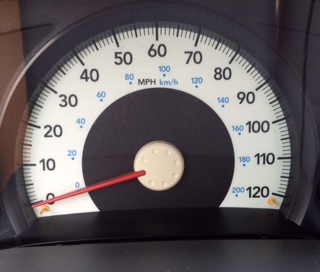
Speedometer

I have fallen in love with a car!  A car!

This hybrid beauty recently carried me, my wife, one large suitcase, assorted hand bags, a large cooler and a variety of other absolute necessities from Arizona to Texas in complete comfort at 52.4 miles per gallon.  My heart beats faster at the thought!  Bar graphs dance across the instrument panel depicting gas consumption while other fascinating gauges and dials announce electric battery capacity and all the things a driver needs to know while cruising along a broad Texas highway.  Not having driven a hybrid before, I read the manual and consulted friends who own one and got all the advice available to make the trip a good driving test.  One thing I learned quickly is that the car’s batteries recharge each time the driver eases off the accelerator or when the brake pedal is pushed to slow down or stop.  Sure enough, up goes the bar graph when my foot comes off the gas pedal and when actually coasting downhill at 70 mph the bar jumps to 100% fuel saving.  Pinch me…I must be dreaming!

Reliving these breathtaking moments after returning home to Arizona, it occurred to me that letting off the gas pedal has a personal application, too.  I’m certainly a poster boy for being busy and staying active, but once in a while I pay the price for pushing my own gas pedal too hard and too long.  Clearly there is value and benefit gained from easing off the gas…clearer perspective, renewed energy, rested spirit.  It’s okay to coast periodically…even to come to a complete stop.  Everyone’s battery needs recharging.

The principle applies to hybrids and humans.

Small Glimpses of Beauty

23 Jul

OLYMPUS DIGITAL CAMERA

Several years ago BBC broadcaster Michael Ford interviewed the remarkable Irish poet, John O’Donohue, whose name is known worldwide for his book Anam Cara.  Ford collected his thoughts about that special encounter in his own book, Spiritual Masters For All Seasons, and in that little volume he remembers O’Donohue’s thoughts about beauty.

“Beauty,” O’Donohue told him, “has become confused with glamour.  Glamour was a multibillion dollar industry that thrived on dislocating or unhousing people from their own bodies and transferring all the longing toward the perfection of image.  Glamour was insatiable because it lacked interiority.  Beauty was a more sophisticated and substantial presence with an eternal heart — a threshold place where the ideal and the real touched each other.  People on the bleakest frontiers of desolation, deprivation, and poverty were often sustained by small glimpses of beauty.”

Sometimes “small glimpses of beauty” is enough.  

I find glamour to be uninterestingly shallow, but the “birds of the air and the lilies of the field”, the downpour of rain in the desert, brilliant oranges and purples painted on the mountains just before the sun disappears, the clarity of stars in a dark sky…small glimpses of beauty.  That’s enough.