Image

Kind Words

26 Oct

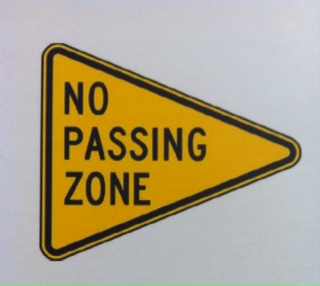
This photo was taken in a local hospital…yes, a hospital…inside. Beneath the photo are the words: “you are now in a No Passing Zone”. A few more lines remind hospital workers that no one is to be overlooked or passed by without a greeting. No one passes a room with a call light on. No one is too busy or too much in a hurry to answer a question, give directions, or make someone else feel welcome and valued. Everybody is responsible for hospitality.

Those of us who have been passed by or overlooked or ignored know the uncomfortable feelings associated with that kind of behavior. Imagine what it must feel like to experience that every day because you are poor, shabbily dressed, uneducated and unwanted. So let’s establish No Passing Zones everywhere we go…starting today. Everyone deserves courtesy and a kind word, and that kind word might be the very thing that transforms the giver as well as the receiver.

The Importance of “3”

21 Oct

Flip a coin.  Draw straws.  Check your horoscope.  How do you make decisions?

The pressure is on us all to buy things because that’s the way our economy works.  The more I spend and buy, the better the overall economy.  At least that’s what I’m led to believe.  But what I do is end up buying things I really don’t need.  I may want it, but I don’t need it.  That doesn’t stop me, though, and so I make the ill-informed, emotional decision to spend money for the newest edition of this or the latest version of that.  My decisions are influenced by pretty pictures and phony promises.  I’m the joy of Madison Avenue…and I’m tired of it.

I think most of us make decisions to satisfy three particular areas of our lives.  The first is Ego.  The second is Altruism.  And the third is Personal Gain.  When I analyze my own reasons for doing the things I do, trying to be as honest as possible, I discover that my ego often demands a hand in the game…is this going to make me look good or bad?   Or, that my desire to be helpful is made at the cost of others’ welfare…my family or loved ones.   Or,  that I calculate how the choice is going to put more coins in my pocket…is this going to benefit me financially or emotionally?  I’m not saying that Ego, Altruism, and Gain are bad things; they just get out of balance and lead me down some regrettable paths that might have been avoided if I had some mechanism or method for making thoughtful, better informed decisions.

So here’s what I’m going to do.

 I’ve decided to take a deep breath and ask myself three questions before making important decisions.  The first is “Is this the right thing to do?”  The second, “Am I doing this for the right reasons?”   And, “Is this the right time to make this decision?”  The right thing, for the right reasons, at the right time.  And, yes, I know that some standard has to define the “right” – whether that standard is ethical considerations, or philosophical concepts, or spiritual beliefs.  Mine happens to be the last one, so I will ask those three questions against the background of my spiritual foundations.  Is this potential decision consistent with the principles of my spiritual understanding…it is the right thing?  Am I about to make this decision for reasons that contradict or undermine those beliefs…is the reason appropriate?  And, is this decision coming at a time that will most support or fulfill those foundational beliefs or is it ill-timed, better considered at a later date…is this really the right time?   No one can say that decision making is always easy, but maybe something like the three questions will help me avoid the regrets of poorly made choices.

It beats flipping a coin.

Image

Through The Fog

8 Oct

Through The Fog

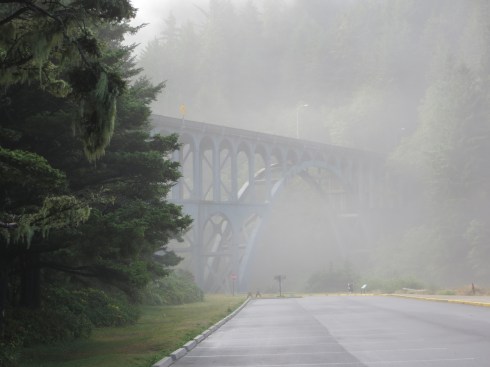
Bridges serve a good purpose. They span otherwise impassable places. They are even beautiful sometimes. And even when the fog moves in, bridges can still speak of strength and connection. So many dots need to be connected in this world…so many dreams need to be linked up…so many chasms need to be spanned. The human bridge of compassionate understanding is always under construction. It will finally lead us all where we need to go if we persist in building it.

Who, me? No thanks!

22 Sep

The knock on the monastery door was loud and decisive.  When the old monk, the gatekeeper, opened the door he found standing before him a middle-aged man dressed in simple but neatly tailored attire.

“I desire to become a monk,” the man announced.  “I have renounced everything I own.  I’ve moved out of my home, my slaves are now the property of a new owner, all my clothes – even the formal robes I used to wear to state dinners – gone.  I am penniless and accept my poverty gladly.  I am ready to become a member of this community.”

“Life is not easy here, my friend,” the old man told him.  “I know, I know,” the inquirer replied, “but I have made a choice to serve the world from my poverty.”

The wise gatekeeper, himself a monk for thirty years, invited the man to pass through the gate, but to sit for a moment with him in the austere courtyard.

“You have made a choice to serve,” repeating the man’s own words.  “Yes, I am ready,” the visitor assured him.  “Very well, I will show you where to change and I will give you your first assignment.  When you have put on the monk’s robe, I want you to clean the latrines over there in the corner, taking care to scrub them carefully.  They haven’t been cleaned in a while so there is an urgent need.”

There was a  long silence as the newly arrived monk-to-be studied the old man’s face, then the latrines across the courtyard, then the man’s face again.  “Who, me?  You want me to scrub the latrines?  Isn’t that the work of those who take care of the monastery for us?  Surely you can make such an assignment to one of them.”

The old man’s three word response was wrapped in a soft, gentle smile.

“We are ‘them'”.

It has been said that there is a huge difference between the choice to serve and the choice to be a servant.  When I choose to serve, writes Richard Foster, I am still in charge.  I decide what’s worthy of our serving, whom I will serve, and a time that is most convenient.  But when I choose to be a servant, I give up the right to be in charge.  The choice to serve is often wedged into a list of important priorities.  Being a servant, though, is a style of living, a willingness to become both available and vulnerable.

To choose to serve.  To choose to be a servant.  It’s not an easy choice. 
Walking With A Friend

12 Sep

The beautiful words in the Episcopal Book of Common Prayer offer comfort and consolation when they remind us that at the end of life “we shall see him who is my friend and not a stranger.”  The reference, of course, is to God, but I’d like to think about an alternative idea, one that might speak to our fear of death and the end of life.

Most of us have been taught by our culture that death is a specter lurking in the shadows until it can pounce upon its prey.  Death is to be feared, regarded as an enemy to be avoided.  But what if…as the spiritual guide John O’Donohue suggested…death is a silent friend and companion from the very beginning of life?  O’Donohue used to tell people that death doesn’t just show up at the end of life, because we all have a “secret friend” who has been beside us since we appeared on the planet.  And, in fact, from the first breath of air we draw, we are launched into an inevitable process of living toward dying.  It happens to us all, even to profound philosophers like Woody Allen who is reported to have said:  “I don’t mind dying.  I just don’t want to be there when it happens.”  It happens, and we will be there.  But what if we’ve been walking all these years with a friend who has waited with us when we have gone through suffering, who has stood by while we healed from hurts, who has been faithful through our bumps and bruises…walking with us, always beside us, part of our deepest identity?

We all know there will come a time when the human body can’t continue the journey; that’s just the way our bodies are made.  The disease is too severe, the injury too profound, the body simply not strong enough to mend anymore.  And it is then that our “silent friend”, the companion who has walked all the way with us, the deepest part of our own nature, takes us by the hand.  It’s like walking with a lifelong companion, a trusted and caring friend, who has never abandoned me and won’t even now.

Name the companion what you will…God, Death, Life, Source…it’s up to you.  It’s just so good to know that, in that moment, we can link our arms, like old friends do, and simply walk on together.  The sting of death begins to disappear and in its place a song forms in our hearts.

Do you remember how this line ends?  “…surely goodness and mercy shall follow me all the days of my life, and…”?


Haiku To You!

3 Sep

The last thing I ever imagined doing is writing Japanese Haiku.  I didn’t even know what it was until the other day when I stumbled upon the word and decided to explore its meaning.  So, inspired by the lovely vacation surroundings in Oregon, I took pen in hand.

Trust me.  Haiku is not easy.  But who thought this classical, ancient form of Japanese poetry would be simple?  Well, me, of course.

Haiku consists of three lines, each with a precise structure so that the final product has seventeen syllables and addresses some aspect of duality.  Impressed?  The key, according to those who really know, is the juxtaposition of opposites in a thought, like: up vs. down; beauty vs. ugliness; good vs. evil.  Things like that.  So, on the tranquil mountainside, amid all the glorious oak trees, I noticed the abundance of moss creeping up tree trunks and clinging to stately limbs.  I said to myself:  moss is a parasite and it will eventually damage the tree, so here is my duality:  good vs. bad; life vs. death.  Haiku, here I come!

Why do so many of us rush into new adventures ill prepared?  Why do Westerners, in particular, assume everything is quickly accomplished and easily done?  “It’s a snap,” we say and then set out to accomplish something for which we are poorly prepared or about which we are completely ignorant.  I’ve been known to call repairmen or plumbers to correct the mistakes I made after having attempted to repair a gadget or a widget that I knew nothing about.  The same principle applies to Haiku.

So, I resolve to be slow and diligent in my relationship with this ancient tradition.  Patience.  Study.  Practice.  More patience.  Humility.  A willingness to learn.  Acceptance of the reality that sometimes I succeed and sometimes I don’t.  These are wonderful ideas to bear in mind as one steps into the unknown.

And that same principle works pretty well, too, when applied to to the spiritual journey that so many of us pursue.

And, no, you cannot read my Haiku.

By The Sea – Follow The Voice

29 Aug

Thomas Merton was a man with a soaring mind and a deep spirit. Thought to be one of the premier spiritual masters of the 20th century, Merton lived first as a rich, spoiled kid wasting his inheritance and then, after his own awakening experience, as a vowed Trappist monk in a secluded hermitage. He was, by the accounts of his biographers, a man of extremes, but the consistent thread that ran though his life was his profound commitment to contemplation as a means of addressing social justice and human rights. It seems a paradox that contemplation might lead to social action, but the proof was in Merton’s powerful life.

He found his strength in a contemplative approach to life and faith. After intensive interviews with Merton, Michael Ford comments that contemplation for the monk was not a philosophy but a “response to a call, or, more precisely, the echo of a silent voice resonating in the inmost center of our spirit.” That’s the key. Merton didn’t create the contemplative encounter, he responded to something that was already and always present. He heard a voice and followed it.

Joseph Campbell, the well known philosopher and mythologist, used to say: Follow your bliss! That is, follow your heart’s urging, follow the deepest joy you experience, follow that which calls you from the deep center of yourself. Merton did just that; he followed the whisper that he heard in his quiet listening.

It’s dark outside right now and very quiet except for the sound of the Pacific Ocean embracing huge boulders on the beach about fifty yards away. The rhythmical rumbling of the surf repeats and repeats until it becomes the only sound definable in the black night. And in that crashing symphony, there comes a “silent voice resonating in the inmost center” of this moment. It calls and beckons. It invites and welcomes. It is both tender and terrifying. It is beyond reason and rational thought. No one creates it for it is creation itself. It speaks when we listen, and in the hearing of it, we are compelled to follow the voice.

Listen to the inmost center of your own spirit. Listen.

On The Mountain – “Where Are My Glasses?”

28 Aug

For the past few months I’ve been looking for a silver, single-strand, chain-linked bracelet for myself.  I figured my empty right wrist would welcome it.  But I’ve had little luck.  Most men’s bracelets I’ve seen are heavy and bulky, festooned with stones or Harley Davidson symbols, and cost far too much money.  I just want something simple and pleasing to the eye.

Well, two weeks ago, while walking along the sidewalk in Multnomah Village outside Portland, I paused for a moment at a vendor’s tent to explore the wares.  I was there, not to find a silver bracelet, but to be part of a wonderful Saturday morning parade celebrating the Village’s community life…floats, bands, marching units, the typical small town parade.  Displayed in the tent was a wide variety of silver products and so I asked the vendor about a man’s bracelet.  “No, I don’t think so,” he told me.  But as I turned to walk away, he called out “Wait a minute.  Would this work?” and held up a silver, single-strand, chain-linked bracelet.  It was love at first sight.

I’ve worn it every day and I’ve been very happy with the purchase.  But a couple of nights ago I decided to give my wrist a rest and took the bracelet off for the night.  It was a big mistake.  When I bought the bracelet, the vendor had put it around my wrist, carefully lining up the ends, holding the little silver ring on one end poised as he used his thumb and forefinger on the other hand to pull a little trigger that opened the clasp.  The two ends came together beautifully and the deal was done.

The next morning I tried to duplicate his procedure: lay bracelet on the bed, pull one end over my right wrist, hold it there with the fourth finger of my left hand, manipulate the clasp with my left thumb and forefinger, open the clasp, slide the connecting ring into the clasp…voila!  Try again.  And then try agin.  After what seemed like a hundred attempts I called my wife, Sue, and begged for help.

We put our two heads and twenty fingers together, but with no success.  My large, male fingers and her slender but arthritic fingers tried in vain for another half an hour.  Finally, we looked at each other and broke down in laughter…it was, in fact, pretty comical.  Especially when, part of the way through the ordeal, she said: “Where are my glasses?  I can’t even see this thing.”

 Maybe people with fat fingers married to people with arthritic fingers, hoping to make sense of the world through trifocals, shouldn’t even own bracelets.  But you have to laugh at yourself sometime, don’t you?

On The Mountain – “Traveling By Night”

27 Aug

You’ve heard the old saying: “They’re as different as night and day!”  And maybe you know people like that: he likes chocolate, she likes vanilla; he prefers politics to the left, she gravitates to the right; hard rock for him, classical for her.  Day and night.

I once asked Sue, with whom I have much in common, about her favorite time of the day.  She answered: “The morning, of course.  Everything is bright and new; energy is up.  The morning is my favorite time of the day.”  And then, not surprisingly, she redirected the question to me.  “I like the dusk of the day,” I told her.  “I like the long shadows and the slowing down.  It’s rather melancholy.  The early evening, that’s my time of day.”  “Sure,” she said, looking at me like I’d gone off the track.  (I state again: we have 52 years of things in common, so this is not the confession of a problem…just an observation about how two people can be different.}

I think of this now, as dusk approaches and the pine trees are casting very long shadows over the valley below our cabin.  And I think of it because of the word “night” that has just caused me to pause on an early page in a fine book by Michael Ford about four spiritual masters:  Thomas Merton, Henri Nouwen, Anthony de Mello, and John O’Donohue.  Even taken out of context, the sentence stands on its own.  Ford writes: “The way of faith involves traveling by night.”

The spiritual masters, these four mentioned and others, have said in chorus that seekers encounter the Holy out of darkness of the soul, in dark places of life, in the night of our confusions, when all seems hopeless and lightless.  In the darkness, one meets the Other.

I have known this to be true intellectually for some time, but now I understand it a little better.  So many times in my own spiritual travels I have awakened during the early morning hours with a thought or an insight or a collection of words that demand to be written down for more exploration in the light of day.  Sermon ideas, possible solutions to problems, even new lyrics to a tune that had been running through my mind…in the night, there they are.  Maybe when dusk slips its arms around the day, I unconsciously relax my mind and become more receptive to the Mystery that has always been there but unable to break through my rigid agendas.  I just know that dusk does it for me.

Two early mornings ago…at 3:43 a.m. to be exact…I slipped out onto the front porch of the cabin into the brilliance of full moon light, into the deafening silence of the forest at night, into the wonder of a world of stunning beauty and majesty, and into the Presence of that which is always waiting in the darkness.  We had a good conversation.


On The Mountain – “Savoring”

27 Aug

I drove through the Sierra Nevada mountains the other day on the way to a holiday in northwest Oregon. Coming from the Sonoran Desert and flat Southern California, it didn’t take long for the stunning beauty of the mountains to soften the tensions of cross-country driving. Rugged cliffs, towering pines, flowery meadows…all of it swirled around me and held out arms of welcome. I savored it.

Savor. That’s an interesting word. Savor means to find delight in a particular taste or smell, or, possibly, delight in the luxurious sights of majestic landscape. I savored the miles and the moments.

Now, having arrived at the one-room cabin overlooking the Willamette Valley, I’m doing it all over again. Night is quietly settling over the valley below and the Coastal Range of mountains on the far horizon is beginning to fade into the soft haze. Large glass windows make up one wall of the cabin and through those windows I look out over a grassy, green lawn, then across the tops of grape vines planted in neat vineyard rows, then beyond the tops of tall pines, and finally into the hazy valley that is surrendering to the darkness. I’m savoring again.

I’m thinking, too, of a friend who would look at the same landscape and conclude that this same world is heading toward destruction, that ugliness reigns everywhere, and that all this, plus all that lives in it, must be saved for a better life in the future. And while I agree with part of the premise…there’s enough ugliness to go around…I am more and more persuaded that “savoring” is just as important as “saving.” Those of us who wear religious or spiritual labels understand the “saving” language in our traditions, but what we too often overlook is the pure joy, even the transformative joy, of savoring the unspeakable grandeur of creation’s gifts. I wonder if “savoring” might accomplish the same end as “saving” if we put our hearts and minds to it?

By the way, a synonym for “savor” is to relish, to smack one’s lips in pure delight.

Listen carefully. Did you hear that? It was me smacking my lips.